Build. Learn. Ship.
Tutorials, guides, and deep-dives on Claude Code, OpenClaw, AI bots, voice agents, and vibecoding.
How to Run Claude Code on Your Own VM (Full Setup Guide)
Stop renting expensive GPU servers. This guide walks you through spinning up an Ubuntu VM, installing Claude Code, and vibe-coding 24/7 on your own infrastructure for a fraction of the cost.

OpenClaw Explained: The Open-Source Agent Framework for Builders
OpenClaw is a modular, open-source framework for building autonomous AI agents. Here's what it does, why it matters, and how 1Academy teaches you to deploy it on your own server.
Build a Telegram Bot Powered by Claude API in 30 Minutes
Using python-telegram-bot v20 and Anthropic's Claude API, you can ship a production-ready AI assistant bot in under an hour. Here's the exact code.
The Beginner's Guide to Vibecoding in 2026
Vibecoding is using AI assistants like Claude Code to write entire applications through conversation. This guide covers setup, best practices, and how to stay in control of your codebase.
Build a Real-Time Voice AI Agent with ElevenLabs & Twilio
Real-time voice AI is easier than ever. We'll wire up Deepgram for STT, GPT-4o for intelligence, and ElevenLabs for TTS into a single sub-800ms pipeline on a $5/mo VPS.
How to Create a Virtual Machine — Chapter 1 (Full Walkthrough)
Watch and follow along as we build a Linux VM from scratch using VirtualBox. Covers hypervisors, disk allocation, network bridging, and first-boot setup — all in one session.
 Olabode Oladiran
How to Create a Virtual Machine — Final Chapter (Cloud & Production)
Part 2 of the VM series. We move from local VirtualBox to cloud VMs on AWS EC2 and Azure, set up SSH key auth, automate provisioning with scripts, and harden for production.
Olabode Oladiran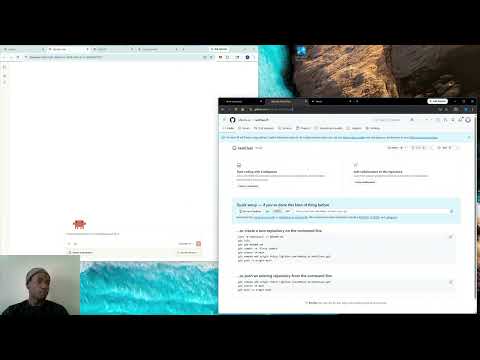
Vibe Coding 101: Build Real Apps by Talking to Claude Code
Forget boilerplate. In this video we build a working web app from scratch using nothing but Claude Code — no manual setup, no copy-pasting docs. Just describe, review, and ship.
Olabode Oladiran
VirtualBox + Ubuntu Server 2026: The Fast-Track Setup
From download to SSH in 15 minutes. This step-by-step guide covers ISO verification, VM sizing, network bridging, and first-boot hardening — everything you need to run production workloads locally.